
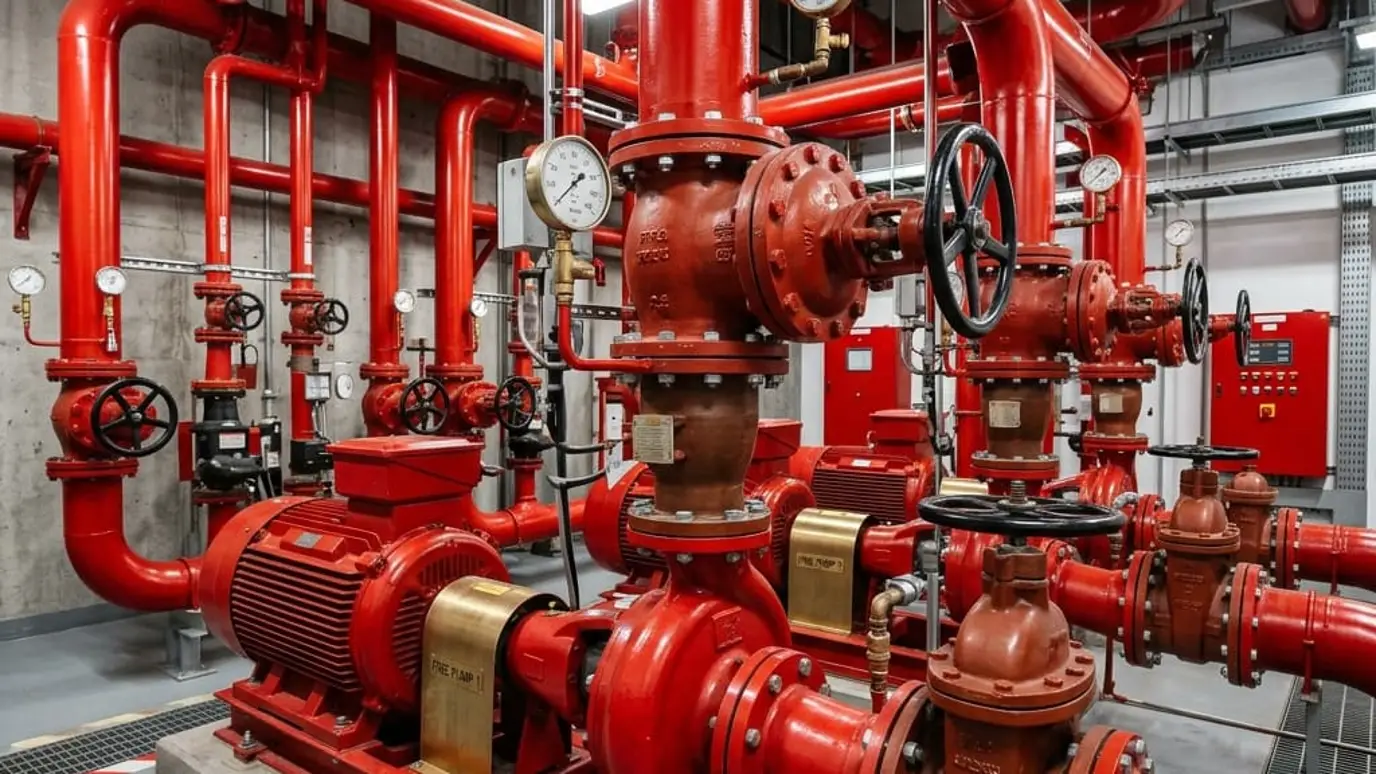
FM-200 fire suppression for factory and industrial control rooms in Riyadh and Saudi Arabia
TALS supplies and installs FM-200 and clean-agent fire-suppression systems for factory control rooms, PLC/DCS rooms and server rooms in Riyadh and across Saudi Arabia.
Our in-house engineering team does the design and agent quantity calculations to NFPA 2001 and ISO 14520, then we install, run the room integrity test and maintain the system.
What we deliver
- Site survey and hazard review, then the right agent for each room: FM-200, another clean agent, or CO2.
- Design and agent quantity calculations by our in-house engineers, to NFPA 2001 / ISO 14520.
- Supply and installation of cylinders, piping and nozzles, from several international brands.
- Detection, release control panel, abort and manual release stations, and interfaces to the plant fire alarm, HVAC shutdown and dampers.
- Room integrity (door fan) test, commissioning and handover.
- Maintenance contracts, and cylinder refills for the systems we installed.
- Replacement of old Halon and FM-200 systems.
The official requirement
«يجب صيانة نظام الإنذار من الحريق وأنظمة الإطفاء بحيث تعمل بشكل مستمر في جميع الأوقات. (901.6) … 4. أنظمة ثاني أكسيد الكربون (904.8) 5. أنظمة الهالون (904.9) 6. الأنظمة النظيفة (904.10) 7. أنظمة الرذاذ الضبابي (904.11)»In short: fire alarm and extinguishing systems must be maintained so they work at all times (SBC 801 §901.6), and "clean systems" (§904.10) are listed among the alternative extinguishing systems, next to CO2, halon and water mist.
Source: Saudi Civil Defense, Industrial Buildings Requirements Guide (Group F), 1443H, pp.27-28
«تجهز أماكن الخطورة التي يخشى فيها من استخدام المياه بنظام الإطفاء الآلي (باستخدام الغازات الخاملة (مثل الهالون).»In short: in printing presses, hazard areas where water is a risk are fitted with automatic extinguishing using gases such as halon.
Source: Saudi Civil Defense, Fire Safety Regulation for Printing Presses, item 7
Sector specifics
- Typical factory rooms: main control room, PLC and DCS rooms, server room, MCC and switchgear rooms, battery rooms.
- Manned control rooms: usually FM-200 (HFC-227ea) or FK-5-1-12. The FM-200 maker states the agent is electrically non-conductive, leaves no residue and reaches extinguishing level in 10 seconds or less.
- Unmanned electrical rooms: CO2 is often the choice, because CO2 total flooding is for unoccupied rooms only. Larger rooms may suit inert gas.
- Limits: FM-200 is not used on reactive metals such as lithium, sodium or magnesium, or on self-oxidising chemicals. We survey the materials in the room before choosing the agent.
Questions procurement teams ask
Is a gas suppression system mandatory in every factory control room?
We found no general Saudi text that requires it in every control room, and no published MODON rule on it. The Civil Defense industrial buildings guide lists "clean systems (904.10)" among alternative systems and requires them to be maintained. The need usually comes from the risk assessment, the insurer or the client's specification.
FM-200 or CO2 for electrical and MCC rooms?
CO2 total flooding is for unoccupied rooms; FM-200 is designed for occupied rooms at concentrations close to its 9% NOAEL, per the manufacturer's bulletin. In the hotels regulation, for example, Civil Defense names CO2 for electrical rooms.
What does Civil Defense say about rooms where water is a risk?
The printing-press regulation (item 7) calls for automatic gas extinguishing in those areas. It is a useful reference when reviewing any factory room where water would cause damage.
Who designs the system and who approves the drawings?
Our in-house engineering team prepares the design and quantity calculations. Under the Civil Defense regulation on engineering and contracting activities, drawing design and review belong to a licensed engineering office.
Can an old Halon system in a factory be replaced?
Yes. Civil Defense's own system definition says halon is on its way to an international ban because of its environmental impact and will be replaced by alternative agents. We check the existing pipe network first, because it cannot be assumed to suit another agent.
Is FM-200 banned in Saudi Arabia after the Kigali Amendment?
No. Saudi Arabia ratified the Kigali Amendment on 10 September 2025; it is a phase-down of HFC production and consumption, starting with a freeze in 2028. Existing systems remain serviceable and refillable.